How a steel order moves through our shop in Colorado
Every order follows the same five steps, whether it is one repaired bracket or a few hundred plate gussets. Knowing the steps makes it easier to send the right information at the start and to know what happens next.
-
Drawing, sketch or sample
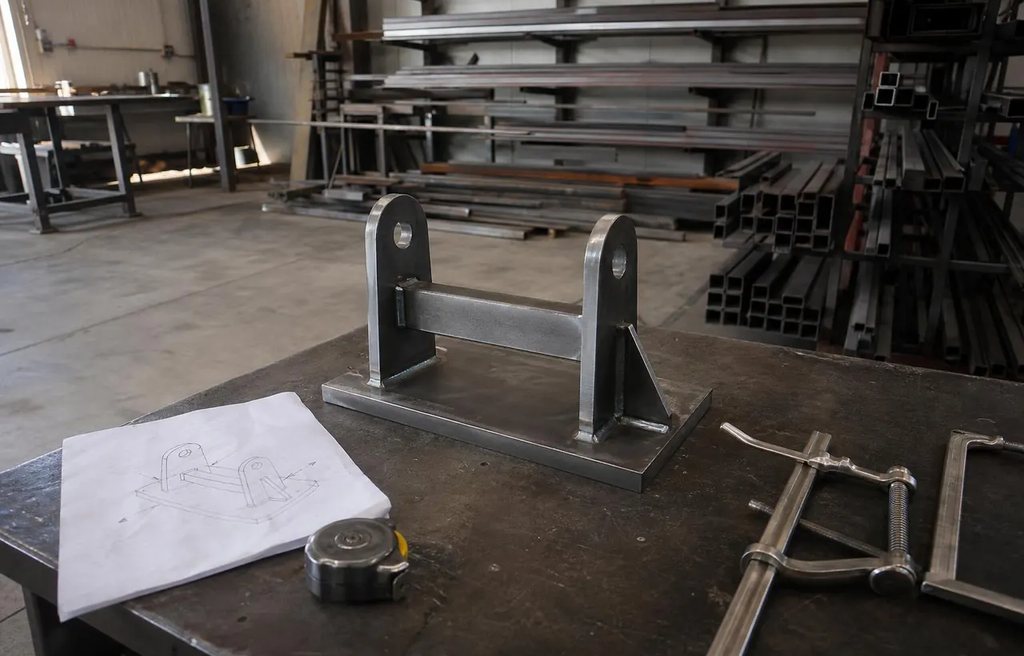
The job starts with whatever you have. A full drawing with sizes and tolerances is ideal, but a dimensioned sketch, a few photos with a tape measure in frame, or the worn part itself is enough. We read it and come back with questions about the things a drawing would normally answer: material, thickness, hole sizes, finish and how many.
If the part holds something or sits near moving equipment, we also ask about that, because it tells us whether the part needs reinforcement.
- Drawings, DXF files or sketches
- Photos with a tape measure in frame
- The old part, if you have it
-
Written quote
Once we understand the part, we send a written quote. It lists the material and thickness, the main sizes, any reinforcement we agreed on, the finish and the quantity. If something is still open, the quote says so plainly, so nothing is assumed on either side.
You read it, ask about anything that looks off, and approve it when you are ready. Nothing is cut before the quote is approved.
- Material and thickness
- Reinforcement and finish
- Quantity and pickup or delivery
-
Cut and form
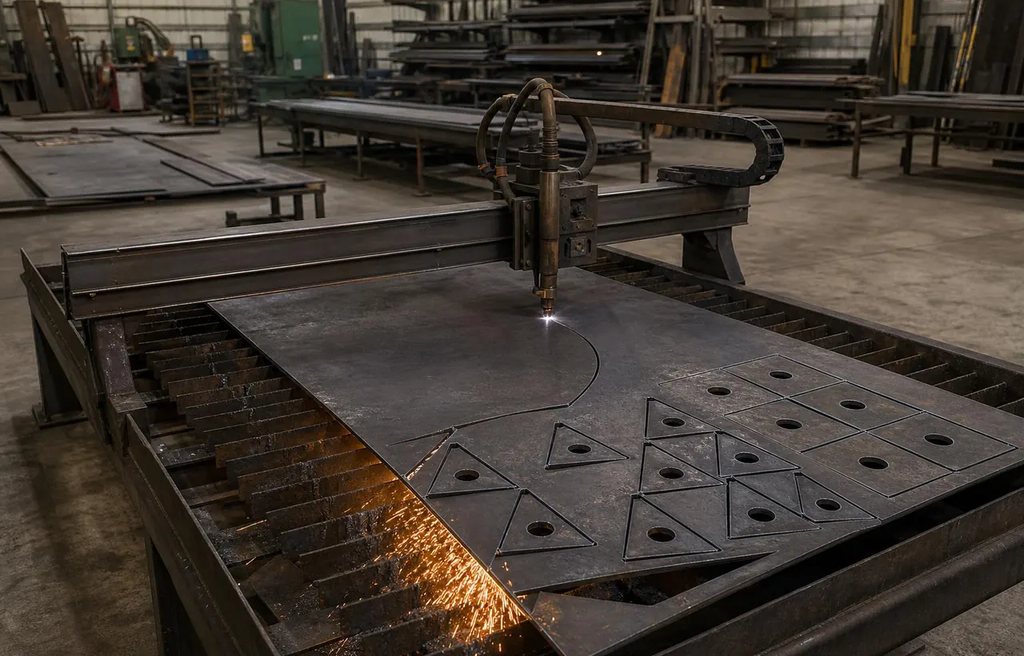
Plate parts are cut on our plasma table, tube and bar on saws, and holes are drilled or finished after cutting. Parts that need bends are formed next, with the first bend checked against the drawing before the rest follow.
For larger orders, the first piece is set aside so you can see it or fit it, when that helps, before the full run goes ahead.
- Plasma cut plate
- Saw cut tube and bar
- Bending and forming
-
Weld and reinforce
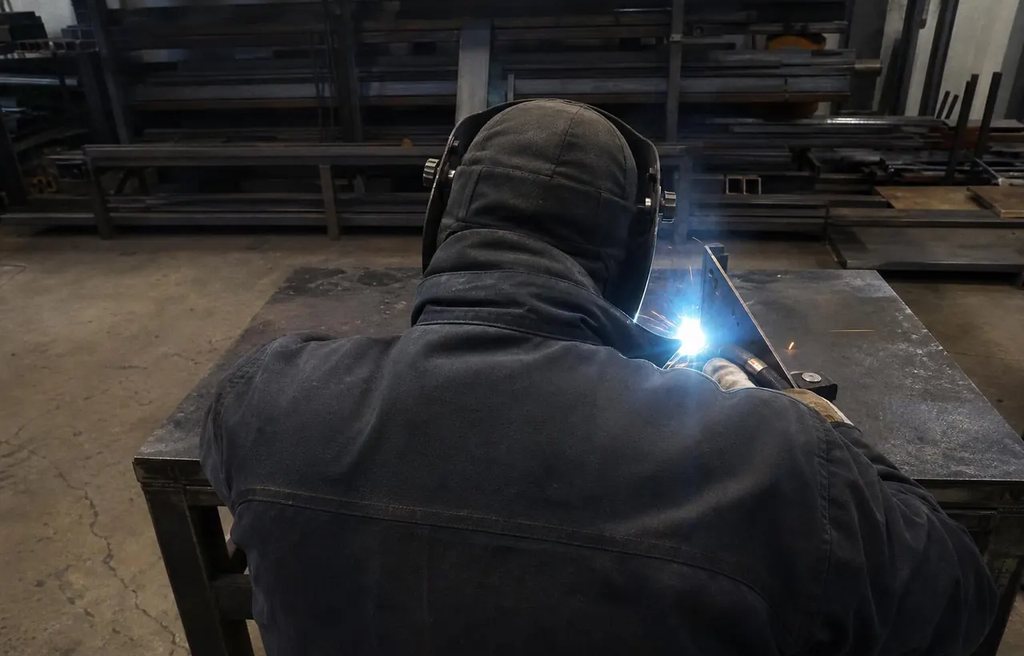
Cut parts are fitted on a flat table or in a fixture, tacked, checked and then welded in a planned order. This is also where gussets, ribs and second walls go in. Welding in the right sequence keeps the part from pulling out of shape as it heats and cools.
Mild steel is usually MIG welded. Stainless and thin parts are often TIG welded for a smaller, cleaner weld.
- Fit and tack on a flat table
- MIG or TIG welding
- Gussets, ribs and double walls
-
Finish and hand off
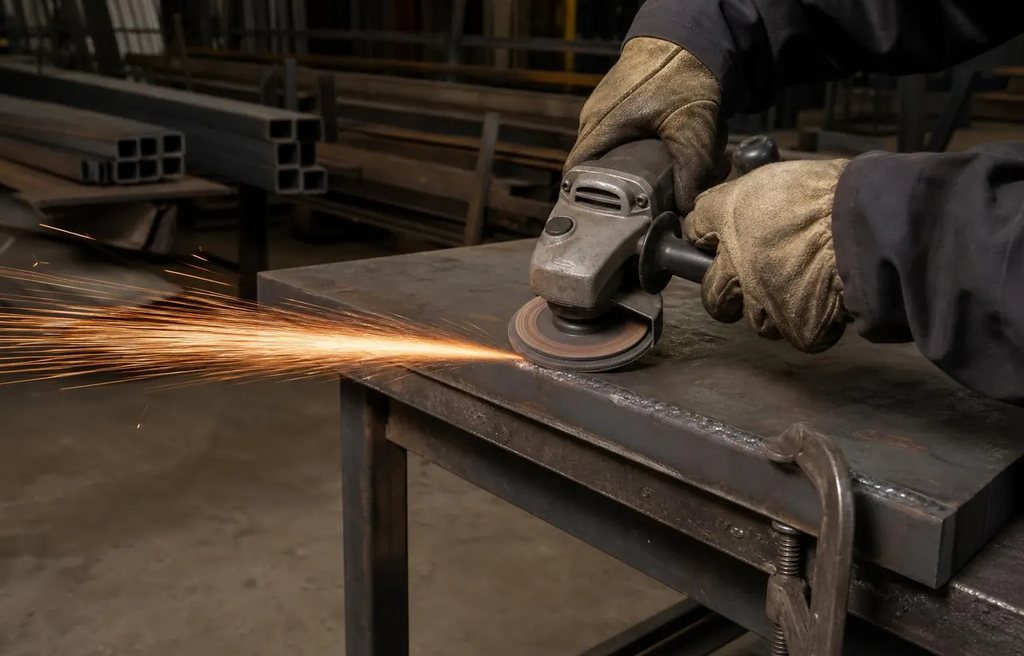
After welding, spatter is removed, welds are cleaned or ground as agreed, and sharp edges are broken. Parts are counted against the order, marked if they belong together, and packed so they do not scratch each other on the way.
Parts are ready for pickup at the shop during business hours. If delivery is needed, we talk about it when we quote.
- Clean welds and edges
- Count, mark and pack
- Pickup at the shop


The process questions answered
How long does a job take?
It depends on the part, the quantity and what is already in the shop that week. We give you an honest estimate in the quote and keep you posted.
Can we see the first piece before the run?
Yes. For larger orders we are glad to set the first piece aside for you to see or fit before we make the rest.
Do you keep records of our parts?
Yes. We keep notes, measurements and fixtures where it makes sense, so reorders match.
Can we change the order after approving the quote?
Yes, if the steel has not been cut yet. Call or email us, and we send an updated quote for the change.
Ready for step one?
Send what you have: a drawing, a sketch, a few photos or the old part. We take it from there.