Brackets are most of what comes through our door. A machine builder needs a mount for a motor, a packaging line needs arms for sensors, a shop needs a row of identical angle brackets for a fixture. Most of these parts look simple, and most of them are, until a long leg starts to flex or a corner starts to open after a few weeks of vibration.
We start every bracket job by asking what the part holds and what moves near it. From there we decide with you whether the bracket stays plain or gets a rib, a corner gusset or a second wall. The goal is a bracket that is as light and simple as it can be while still staying exactly where you put it.
Reinforcement that suits these parts
Not every part needs it. When one does, these are the options we usually discuss for steel bracket fabrication.
We look at your drawing, sketch or old bracket, ask what it carries and agree on material and thickness.
2
Cut and drill
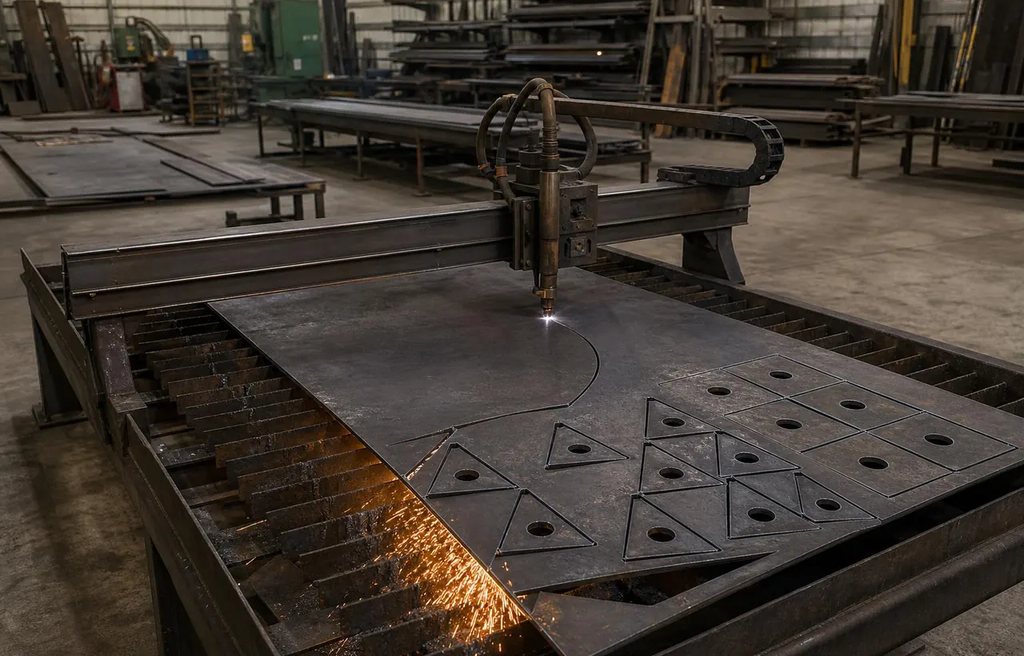
Blanks are cut from plate or flat bar, holes and slots are made, and edges are cleaned before forming.
3
Form and reinforce
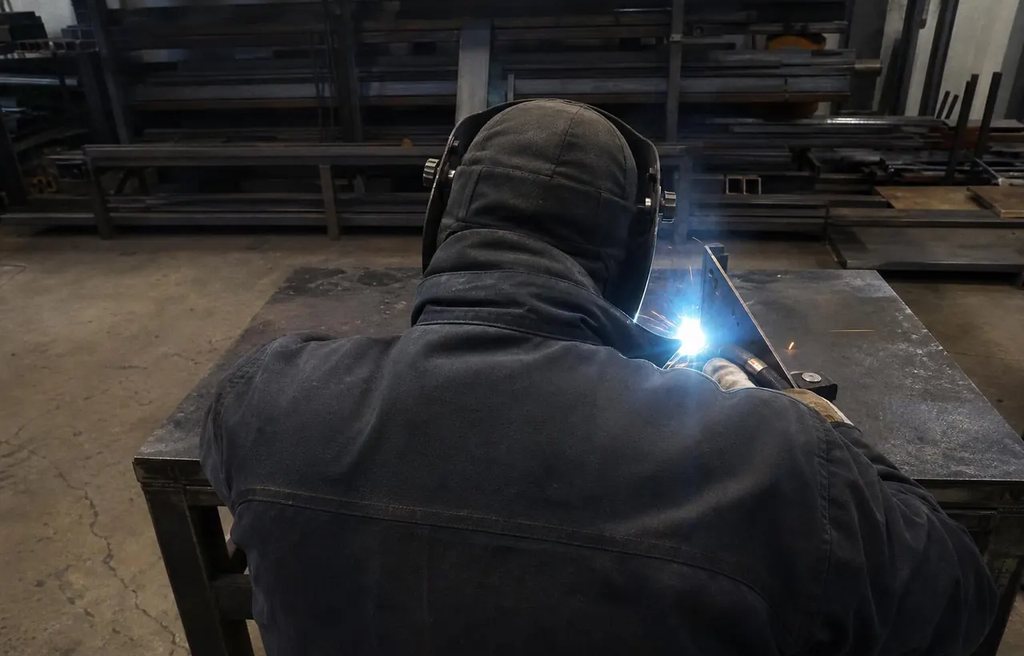
Legs are bent to angle, then ribs, gussets or a second wall are fitted and welded where we agreed.
4
Finish and pack
Welds are cleaned up, sharp edges are broken, and brackets are counted and packed for pickup.
Parts we often make this way
Motor and gearbox mounts
Sensor and camera arms
Guard and cover brackets
Shelf and tray brackets for equipment
Conveyor side brackets
Panel and enclosure mounts
When a plain bracket is enough
A short bracket made from thick enough steel often needs nothing added. If the leg is short, the part is light and nothing bumps it, extra steel only adds weight and cost. We will say so when we see it.
A good test is to picture the bracket a year from now on your machine. If the honest answer is that it will just sit there holding a small cover, plain is the right call.
Choosing the reinforcement
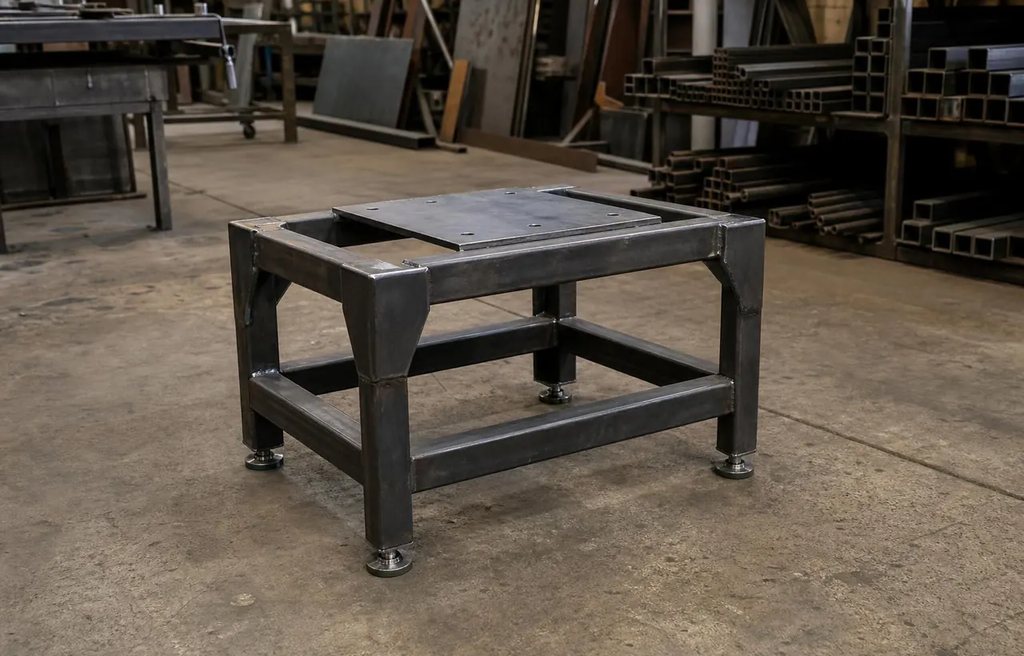
Ribs help when the problem is flex along a long leg. Gussets help when the problem is the corner. A double wall helps when the part twists. Some brackets need two of these, and a few need all three.
If you are not sure which problem you have, send a photo of the old part or describe where it bent or cracked. That usually tells us right away.
Steel bracket fabrication questions answered
Can you copy a bracket we already have?
Yes. Bring or ship the bracket, or send clear photos with a tape measure in frame. We measure it, ask about any changes, and quote the copy.
Do you make left and right hand pairs?
Yes. Mirror pairs are common on machine frames and conveyors, and we keep them marked so they stay together.
Can a gusset be added to brackets we already own?
Often, yes. Bring a sample and we will look at whether a gusset can be welded in without moving the holes or the mounting face.
What thickness should the bracket be?
It depends on what it holds and how long the legs are. Tell us the job and we suggest a thickness in the quote for you to approve.
Often booked together
Parts rarely need a single step. These are the services most often quoted alongside steel bracket fabrication.
Your cookie choice. A few necessary cookies keep this website working and secure. Optional analytics and advertising cookies stay off until you say yes. Cookie Policy
Manage Cookies
Pick the optional cookies you are happy with. We remember your choice for 180 days. If your browser sends a Global Privacy Control signal, optional cookies stay off.
Strictly necessaryRequired
Keep the site working and secure and remember your cookie choice.
Show which pages people read, so we can improve them. Off by default.
Check whether an ad resulted in a quote request. Stays off unless you switch it on.
A Global Privacy Control signal was detected, so optional cookies remain off.